What we do Where we work The standard Process Get in touch
Pontifex Infrastructure · Data-centre land & power

Land and power, ready to build

Pontifex Infrastructure originates and de-risks data-centre sites in Portugal. Land, grid connection and planning consent are secured under a staged process, and the resulting platform is transferred to an operator or investment partner.

Greater Lisbon · Porto · Portugal

01

Where we come from

We find the land and the power that a data centre needs, and we get both ready to build on.

We are land people first. Since 2021 our sister company has been buying parcels on the Margem Sul, across the river from Lisbon, walking them through the town hall and building on them. Five years of that leaves you with two things money does not buy quickly: land in a region we call home, and councils who know us by name because we filed the applications and then delivered what we said we would.

Data-centre land is the same craft with the difficulty turned up. The building is the easy part. The hard part is the grid connection, the planning consent and a clean title, in that order, and that is the part we enjoy.

Alexander Tan
Co-founder

Site origination, grid position and municipal process: the planning record, the network assessment and the constraints file kept on every site. Leads the relationships with network operators, advisers and the engineering team.

Sebastiaan Tan
Co-founder

Capital, structuring and landowner negotiation: offers, contracts and the project companies that hold each site.

Engineering
Within the team

Data-centre engineers currently engaged on hyperscale work at Sines. Grid studies, connection applications and technical due diligence.

02

Portugal,
Lisbon and Porto

Portugal only. Activity is concentrated where transmission infrastructure already exists. Every site is assessed against the municipal plan, the distribution network and REN's ten-year development plan before an owner is approached.

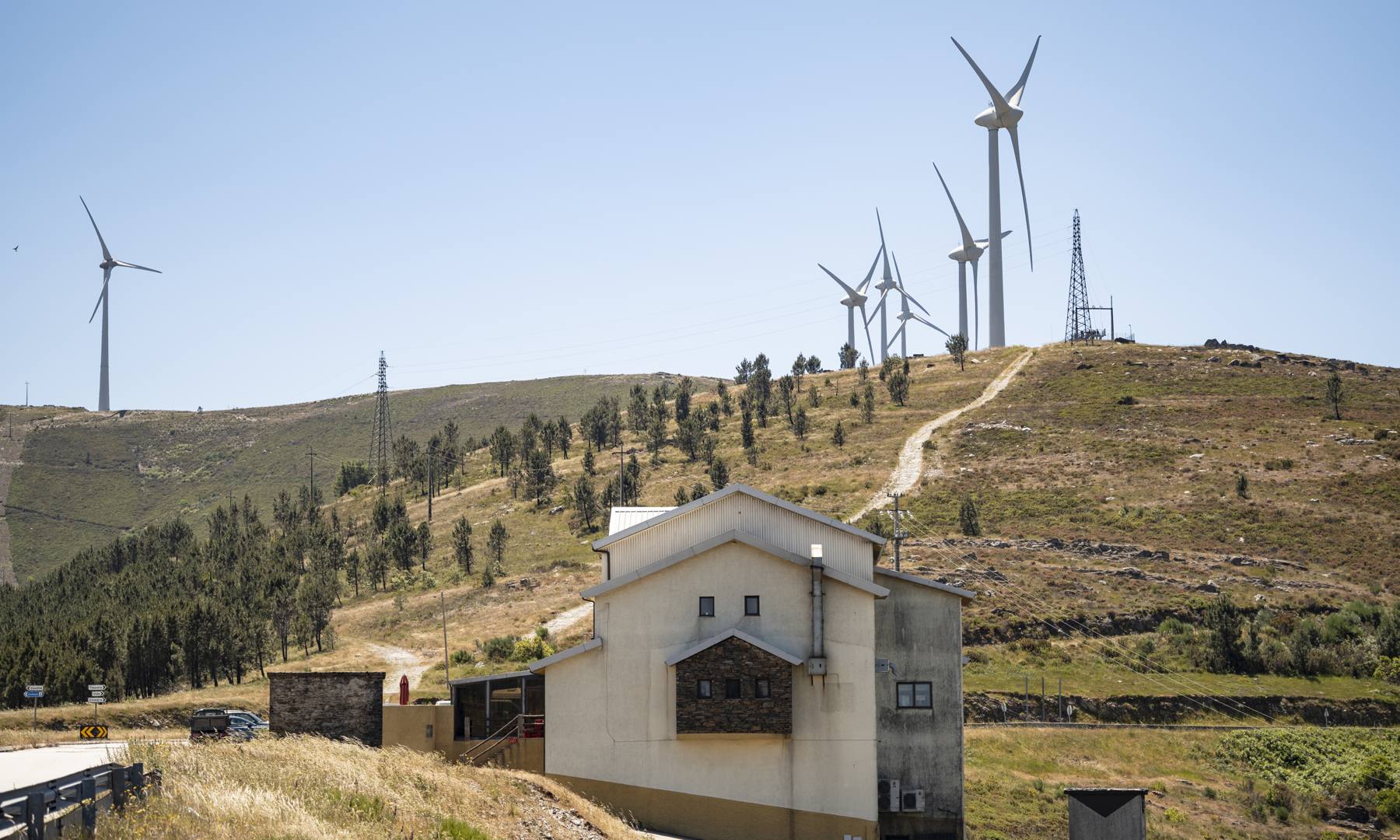
Wind turbines and transmission pylons above a village in Castelo Branco
Wind and transmission lines above a village, Castelo Branco
PortoSecondary market · sites screened Greater LisbonCore market · sites under negotiation
Greater Lisbon

Core market

The carrier hotels, the subsea cable landings and the industrial belt north of the city, where industrial zoning and high-voltage infrastructure coincide. The majority of current activity is here.

Sites under negotiation
Porto

Secondary market

Portugal's industrial north, with an established manufacturing base and transmission capacity being added. Assessed under the same method as Lisbon.

Sites screened
Why Portugal

EU ground, Atlantic cable

EU jurisdiction, one of Europe's highest renewable shares in the generation mix, an Atlantic climate favourable to cooling, and direct subsea connectivity to the Americas and Africa.

Individual sites are not disclosed while negotiations are open.

03

The Portuguese grid,
as it affects site selection

Regulation

How Portugal allocates grid capacity

Since January 2026, connection requests of up to 20 MVA per corporate group are processed under the ordinary procedure. Requests above that threshold enter a competitive allocation procedure with a bond per MVA, and mainland Portugal is treated as a single high-demand zone. For a data centre, this defines the first phase: 20 MVA under the ordinary route, with further capacity allocated competitively.

Portaria 15/2026/1 · Despacho 1135/2026 · Anúncio 16-A/2026
Transmission

REN's ten-year plan and the Lisbon region

The 2025–2034 plan reinforces the 400 kV ring north of Lisbon with a new line scheduled for 2027–28 and fault-current works at the existing node, but adds no new injection point in the Lisbon area before the 2030s. REN expects Greater Lisbon to become a high-demand zone with competitive allocation. Sites able to connect to existing infrastructure are therefore the ones most likely to be delivered.

REN PDIRT 2025–2034 · ERSE opinion, June 2025
Method

Site assessment before owner contact

Portuguese municipalities publish their plans as map services. Assessment covers the zoning class, easements and line corridors, flood, seismic and heritage layers, cadastral parcels and any execution unit, overlaid with the 60 kV network and REN's plan and checked against ten years of imagery. The listed location is not relied upon; the mapped polygon is. Most sites are declined at this stage.

Council GIS services · E-Redes and REN network data · APA and ICNF layers
04

Context and recent updates,
Portuguese data centres and energy

What has been announced in the market we work in, with dates and sources. Third-party information, reported as published. None of it concerns a Pontifex site.

05

One gigawatt of powered land,
built for edge and colocation

Our mission is to assemble one gigawatt of powered land in Portugal for edge and colocation data centres: many mid-size sites of 10 to 40 MW, close to the cities, carrier hotels and cable landings they serve, each on its own injection point, the place where a load is fed from the network.

Edge and colocation capacity earns its value from proximity and latency, so it belongs near demand and not in one remote campus. Mid-size sites also fail independently. A single 200 MW campus rests on one substation, one consent and one municipality. Twenty sites spread across separate nodes do not. The figures below show how much of the mission exists today.

On the grid rules: Portugal's ordinary connection procedure handles up to 20 MVA per corporate group, with the mainland as one zone. Beyond one ordinary request, capacity is obtained through the competitive procedure, or by the operator or partner that takes each site applying in its own name.

Pipeline by gate · Portugal · September 2026

Gate 1
23
Sites screened
In talks
5
Owner discussions open
Gate 2
0
Land under control
Gate 3
0
Grid answer in writing
Gate 4
0
Consent granted
Gate 5
0
Transferred

Definitions. Screened: a desk assessment against the municipal plan, the 60 kV distribution network and the transmission operator's ten-year plan, September 2026. In talks: discussions with the owner have opened; this is not control. Gate 2: the parcel is under option, exclusivity or promissory contract. Gate 3: a connection request has been lodged and answered in writing by the network operator. Gate 4: planning consent granted. Gate 5: platform transferred. No connection request has been lodged to date. Nothing on this page represents contracted capacity.

06

EN 50600, and the part of it
we work in

We assess sites using EN 50600, the European standard for data-centre facilities and infrastructures, which has ISO/IEC 22237 as its international counterpart. Part 1 sets the classification system. An Availability Class from 1 to 4 is chosen separately for power supply and distribution, environmental control and telecommunications cabling, and the facility takes the class of the weakest of the three. A Protection Class from 1 to 4 is assigned to each space and pathway. Part 1 also requires that the class follows from a documented business-risk analysis, and that analysis belongs to the operator. Part 2-1 covers building construction, and its opening clauses are where our work sits: location, the site survey and site configuration.

A site cannot conform to the standard. Only a design can. What a site does is rule a class in or out, so we record the conditions that location fixes. The environmental risk analysis covers the natural environment: flooding and designated flood plains, seismic activity, high winds, lightning, wildfire, coastal proximity and elevation. It covers adjacencies: neighbours handling flammable, explosive or toxic material, air contamination, highways, railways and flight paths, vibration sources, and electromagnetic interference from high-voltage lines and transmitter stations. It also reads the municipal plan for what may be built next door later.

Each utility is tested on the standard’s four criteria of accessibility, redundancy, availability and capacity. For electricity that means the voltage level and published hosting capacity at the injection point, the short-circuit current, the historical reliability of the feeding network, and the redundancy of source and path the network can offer, since the external supply has to match the Availability Class chosen. For telecommunications it means more than one service provider and physically separate routes from the site boundary.

Site configuration is checked against what the plot has to carry: data halls, a 60 kV customer substation, generator and fuel-storage areas with their emission and noise limits, heat rejection, positions for temporary plant, separated utility pathways from boundary to building, more than one access route, and land reserved for expansion. The ground investigation is scoped as the standard requires: safe load-bearing capacity, buried cavities and services, soil resistivity for the earthing design, groundwater and its variation, contamination, and seismic risk under CLC/TS 50600-2-10.

On structural loading we treat the standard’s figures as a floor and not a target. It sets a minimum of 7.2 kN/m² for computer, electrical and mechanical rooms and recommends 12 kN/m². High-density and liquid-cooled halls are now commonly designed for 15 to 25 kN/m², so ground conditions are investigated for that range, and for heavy plant and delivery loads.

The output is a site file that an operator’s design team can take into the strategy, objectives and system-specification phases of the standard’s design process. We do not assign a class to a site. We document which classes the site can support, and the evidence for it.

07

A staged commitment of capital

Five gates separate an identified parcel from a platform an operator will acquire. Capital is committed gate by gate, so that a site which fails does so at limited cost.

Gate 1

Screen

Desk-based assessment: grid headroom, fibre routes, zoning, flood risk and exit view.

Option payments only
Gate 2

Control

Option or exclusivity over the parcel. Connection enquiry lodged with the network operator.

Option money only
Gate 3

Prove

Grid offer or confirmed queue position. Surveys, ground investigation and environmental screening.

First material commitment
Gate 4

Consent

Planning application submitted and determined. Easements and access agreements executed.

Committed
Gate 5

Deliver

Development-ready platform. Sale, ground lease or joint venture completed with the operator.

Capital returned
08

Screening criteria

A parcel must satisfy all six criteria before capital is committed. The majority do not; the value of the process lies in what is declined.

01

Power

Distance to a substation with verifiable headroom, the network operator's connection procedure, and a realistic energisation date. All other criteria are secondary.

02

Fibre

Diverse physical routes to a carrier-neutral point of presence, and the cost of the final connection. A single route is a single point of failure.

03

Land

Unencumbered title, room for expansion, ground conditions suitable for the loads involved, and access adequate for construction traffic.

04

Water

Availability and licensing of cooling water, or a site on which a closed-loop or air-cooled design is viable without penalty.

05

Consent

Zoning that permits the use, and a municipality that regards the investment as beneficial. Both are assessed at the outset.

06

Exit

A defensible view of which operators are active in the market and at what scale, formed before commitment rather than after.

Rows of server racks in a data hall
The end state: a grid-connected, consented site, ready for an operator’s fit-out.
09

Let’s have coffee in Amsterdam,
February 2027

From 2027 we are open to a capital partner at portfolio level, alongside transfers of individual sites to operators. Our objective for that point is a first 25 MW at Gate 3: land under contract and a written answer from the network operator. It is an objective, and the pipeline figures above are where its progress will show.

We will be at KickStart Europe in Amsterdam in February 2027, the annual strategy and investment conference for European digital infrastructure, where operators, funds, lenders and network companies set out the year ahead. We are using it to meet prospective partners. If you will be there, write to Sebastiaan Tan.

sebastiaan@pontifex.fund
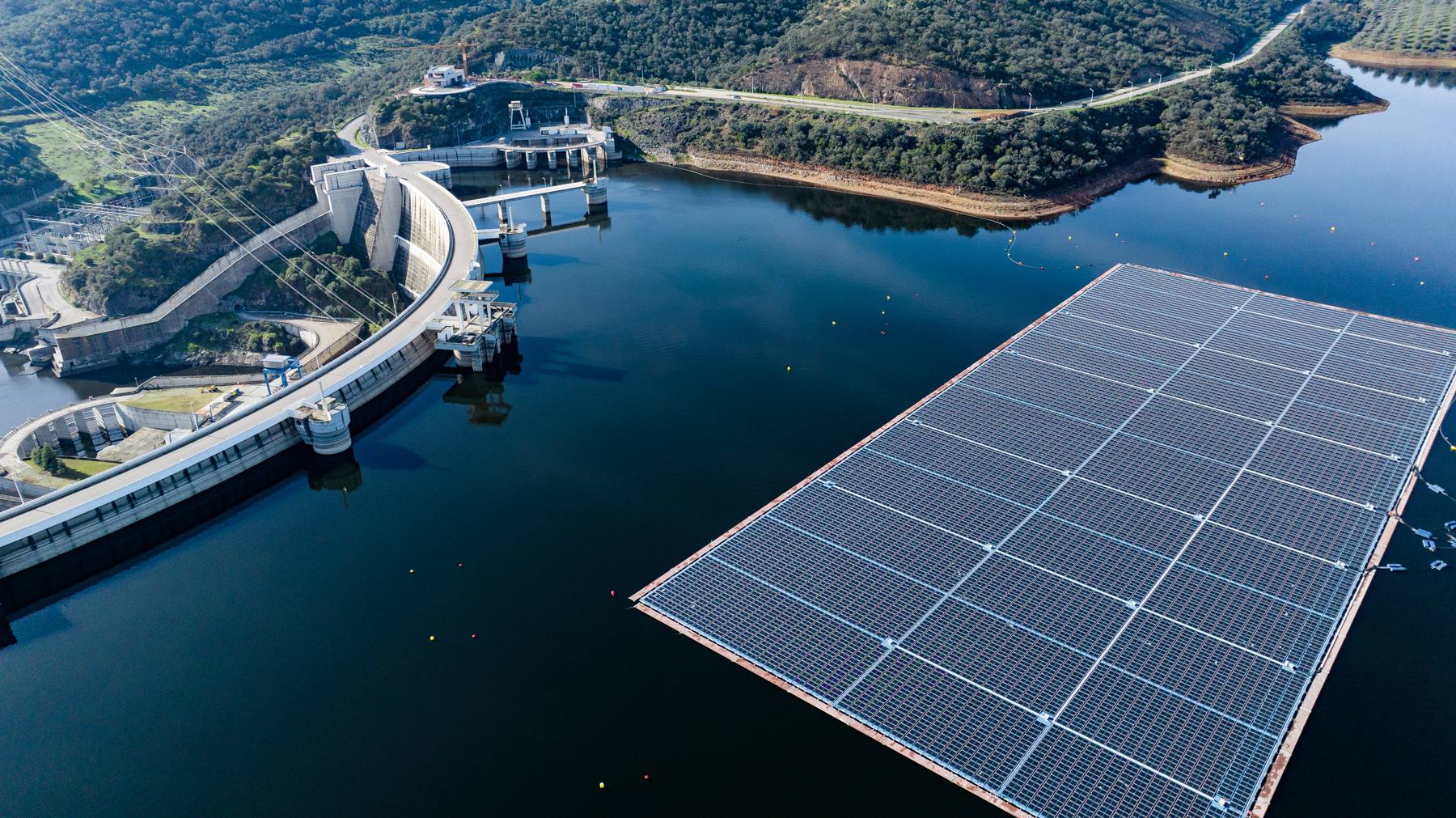
Floating solar panels on a reservoir beside a dam in southern Portugal
Floating solar beside a hydro dam, southern Portugal. The national grid carries one of the highest renewable shares in Europe.
10

Enquiries

Pontifex Infrastructure works with data-centre operators, landowners and capital partners in Portugal. Enquiries may be submitted through the form or to the address shown. Substantive approaches receive a reply.

EntityNedpo Group, Lda. · NIPC PT516596799

Emailinfo@pontifex.fund

Capital partnerssebastiaan@pontifex.fund

Phone+351 918 568 235

Registered officePraça Santa Cruz 42, 2830-402 Barreiro, Portugal

Thank you

We've received your message and will be in touch shortly.